on PinterestExperts say that sleeping on your side may be better for your health. Image Credit: Amor Burakova/StocksyCertain sleeping positions, like side sleeping, may be better for your health.
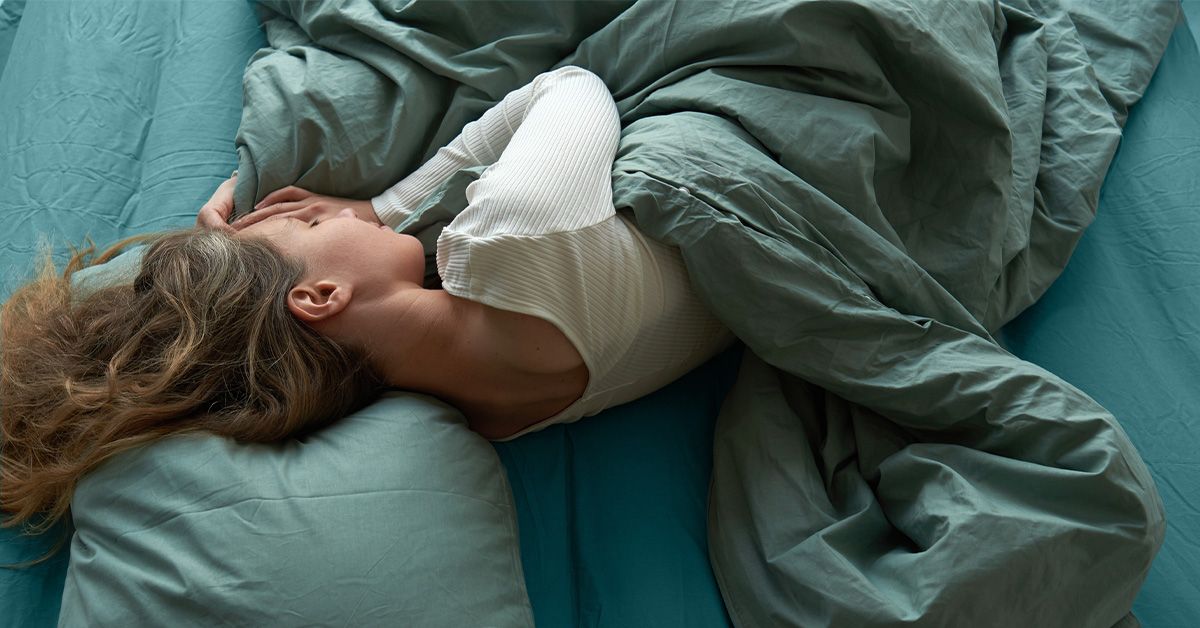
on PinterestExperts say that sleeping on your side may be better for your health. Image Credit: Amor Burakova/Stocksy
- Certain sleeping positions, like side sleeping, may be better for your health.
- Sleeping on your stomach or sleeping on your back may affect your health in various ways, according to experts.
- There are some ways you can help retrain your body to sleep differently.
Quality sleep is vital for overall health and well-being. During sleep, your body works hard to maintain your physical health and support healthy brain function.
The amount and quality of sleep you get can impact various aspects of your health, including your heart, metabolism, respiratory system, and immune system.
The position you sleep in may also affect your health. Some experts suggest that certain positions may be better for your health, while others may have negative effects.
Healthline spoke to sleep experts about what may be considered the best and worst sleeping positions for your health.
Why sleep positions matter
The position you sleep in can affect your body in various ways.
For example, some positions may lead to back pain and stiffness. Other positions, such as sleeping on your back, may aggravate symptoms of sleep apnea or indigestion.
Nancy Collop, MD, a professor of medicine and neurology and director of Emory Sleep Center, explained how your sleep position can impact your respiratory health.
“If the upper airway (nasal passage to larynx) [is] vulnerable to collapse (narrow or congested, say due to allergies, URI [upper respiratory infection], then when sleeping on your back, you are more prone to snore or have sleep apnea,” Collop told Healthline.
“This is likely because the jaw drops back and [the] airway narrows. Also, if you are prone to reflux, that might be worsened when sleeping flat, either on [your] back or left side.”
Sarathi Bhattacharyya, MD, a pulmonologist and sleep medicine specialist, and medical director of the MemorialCare Sleep Disorders Center in Long Beach, CA, noted that sleep positions can affect people differently depending on any underlying medical conditions.
“Common considerations that may influence your choice of sleeping position include chronic pain, sleep apnea, and pregnancy,” Bhattacharyya told Healthline.
“Certain positions can make these conditions more challenging or worsen their impact on the quality of your sleep.”
Best sleep positions
Sleeping positions are often a personal preference. However, some experts may recommend certain sleeping positions based on medical needs.
For instance, a recent systematic review found that supported side sleeping and back sleeping (supine) may be more beneficial for spine health in individuals with lower back pain.
Collop agreed that side sleeping, especially on the right side, may be one of the best sleeping positions.
Bhattacharyya said that the “best” sleep position also depends on the individual medical context. He gave the following examples:
- The best sleeping position for back and neck pain is typically sleeping on your back. This can help achieve better alignment of the spine and neck, preventing strain on the neck muscles.
- The best sleeping position for patients with sleep apnea is often on their sides. This
Learn more about hair transplant at Rubenhair clinic.
Get a Free Consultation
Consult with our specialists about FUE procedure, PRP therapy or hair transplant.